
For Educators: Teaching Units & Lesson Plans:
Politics & Diplomacy
Lesson Plan 5: Pipe Ceremonies and Other Misunderstandings: Up in Smoke?
[This lesson is recommended for advanced students]
OBJECTIVES
Students will:
- draw inferences from observing artifacts
- analyze information gathered from various sources
- compare/contrast tribal and American perspectives
MATERIALS
| SUPPLIES |
Loose tobacco in a pouch |
| IMAGES | |
| OBJECTS | |
| VIDEOS |
Calvin Grinnell, Hidatsa |
| STUDENT READING |
American Indian Quotes (PDF) |
| ACTIVITY SHEET |
|
| TEACHER READING/ MATERIALS |
OPENING
 Pour some loose tobacco out of a pouch onto a piece of paper. Pass it around and ask the students to examine it but not tell what they think it is. When everyone has examined it, ask for a show of hands of those who think they know what it is. Let a student identify it as tobacco. Tell the students that tobacco is a native plant of the Americas and that Indians had been smoking it for many years before the Europeans arrived. Explain that while the men of the Corps might have smoked pipes around the fire at night, almost all Indian tribes had very different ideas about and reasons for smoking a pipe. Tell the students that they are going to learn something about tribal pipe ceremonies and some misunderstandings that Lewis and Clark had about these tribal customs and traditions.
PROCEDURE
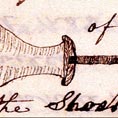
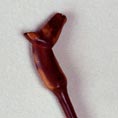
- Break the students into five cooperative groups and tell them that they will be given an informational packet containing five artifact images and five primary documents, each of which make reference to one of the artifact images. After studying the materials in their packet for clues, they are to infer which primary document connects to which artifact image.
- Distribute packets to each cooperative group. Each group should have:
- a facilitator to lead the discussion
- a reader to read the documents
- a recorder to write answers to the questions in the packet
- a reporter to report the findings to the class
- Students are to work together in their groups to first, discuss the questions about the artifact images found in their packets and second, to read and discuss their primary documents and try to match each artifact image to a document that has references to that artifact.
- Give students about twenty minutes to finish their group work.
 Bring the class back together and ask the group reporters to share with the entire class their responses to the artifacts and documents.
- After the groups have finished sharing, tell the entire class the information you've been given about the artifacts. ("Artifact Information Sheet")
- Next, ask students if they believe they can discern from their group work whether Americans had the same understanding of "smoking the pipe" as the Indian peoples did. Then tell the students that some contemporary American Indians have been interviewed about their people's perspective on this issue and that you are going to play/read some of these clips.
- After the students have seen and heard the clips, work through the following chart together as a class, filling in the chart with information from each writer or speaker.
Pipe Ceremony Attitudes Chart
CLOSING
Summarize with the students what they have learned about different points of view that Indians and Americans held/hold about pipe ceremonies.
SUGGESTED FORMATIVE ASSESSMENT
Have students work individually or in groups to design posters that show attitudes and feelings about the pipe ceremonies from the perspective of both American Indians and Americans.
