
For Educators: Teaching Units & Lesson Plans:
Animals
Lesson Plan 4: Value Clarification
OBJECTIVES
Students will:
- describe the nature of the American Indians' interaction with their environment
- gain a deeper understanding of some American Indians conceptions of animals
- see how Lewis and Clark's increased contact with animals on this journey changed their attitudes toward animals
- understand some similarities and differences between the views of the American Indians and Lewis and Clark
MATERIALS
| SUPPLIES |
Chart paper for recording information |
| STUDENT READING |
copies of all American Indian Quotes (PDF) copies of excerpts from Journals of Lewis and Clark (PDF) |
| OBJECTS | |
| IMAGES |
The Bear Pursueing His Assailant [sic] |
| ACTIVITY SHEET |
|
| VIDEOS |
BACKGROUND
The American Indians have a close relationship with animals and their environment. Although the American Indians hunted and killed animals, they nevertheless respected every part of nature. They offered prayers to the spirits of the animals they killed and showed honor to their environment by "treading lightly on the Earth." The Europeans did not understand this relationship when they encountered American Indians.
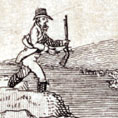 The Corps of Discovery observed and documented many animals, including the buffalo, wolf, antelope, grizzly bear, and several species until this time unknown to science. As the journey progressed, Lewis evidenced a different attitude toward animals, attributing human characteristics to animals he encountered.
We value animals on many different levels, such as:
Ecological value—every species has a particular role or niche, and the loss of the species reduces our ability to learn from it.
Economic or medical value—many products that we use every day are made from animal products. Wild species provide us with a genetic insurance policy.
Recreational value—animals provide hunting, fishing, and bird watching, animal photography, fun with a pet.
Spiritual value—in many cultures animals are a link to the spiritual world.
Aesthetic value—animals are a source of beauty and wonder.
OPENING
Ask students, "What do you value?" and "What do we mean by value?" Discuss and list the things we value. Lead the students into naming non-material things that are of value (such as honesty, love, family, an old toy, a beautiful scene, a job well done, etc.).
PROCEDURE
- Begin with the question "how do you value animals?" List all answers. Now have students decide the different categories of value. These could include:
- ecological
- economic or medical value
- spiritual
- educational and scientific
- recreational
- intrinsic
- aesthetic
- Read excerpts from Joseph Epes Brown's book Animals of the Soul. Ask students to write about how the speaker values the animal based on the categories from number 1. Watch video footage or read transcriptions.
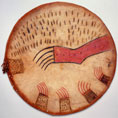 Divide into groups. Give each group several OBJECTS to study. Have students use the Object Analysis Guide to direct their analysis. After they have worked through the guide, give them the information about each object. Again, ask students to look at the object and draw a conclusion about how the person who made or used the object valued the animal it represents, based on the categories from number 1.
- Read the Lewis and Clark journal entries. With each entry, direct students to once again write about how the animal is valued.
CLOSING
Allow students to compare their data from all three activities. Draw a Venn diagram on the board labeling one circle "Corps" and the other "American Indians." The students will list the values of the Corps in one circle and the values of the Indians in the other circle. The overlapping area is for the values that the two groups shared, such as the the value of the animals for food.
SUGGESTED FORMATIVE ASSESSMENT
The students will write a paragraph on how the two groups were alike and how they differed in their values and a paragraph on how they, the students, value animals.
