IMAGE GALLERY
|
 |
Access the Image Gallery to see all images, objects, and documents used in this lesson plan.
|
View Image Gallery
|
|
|

Lesson Plan 2: Classification
OBJECTIVES
Students will:
- demonstrate an understanding of the science of taxonomy
- classify items based on common characteristics
MATERIALS
BACKGROUND
Thomas Jefferson instructed Captains Meriwether Lewis and William Clark to lead an expedition from St. Louis up the Missouri River into the Louisiana Territory. Their mission was to map a waterway to the Pacific Ocean, but along the way they were to be alert for “objects worthy of noticeƒ [such as] the animals of the country..[and] the dates at times of appearance of particular birds, reptiles, or insectsƒ.”
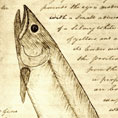 To prepare for this journey of discovery, Meriwether Lewis traveled to Philadelphia in the spring of 1803 to study with some of the most renowned scientists of the day. These scientists gave Lewis a crash course in taxonomy, the branch of biology that deals with the classification and naming of living things. But Lewis also took reference books along on the expedition. To prepare for this journey of discovery, Meriwether Lewis traveled to Philadelphia in the spring of 1803 to study with some of the most renowned scientists of the day. These scientists gave Lewis a crash course in taxonomy, the branch of biology that deals with the classification and naming of living things. But Lewis also took reference books along on the expedition.
OPENING
Tell the students that they are scientists who have been assigned to travel on a journey of discovery where they will encounter unfamiliar life forms. Their job is to identify and/or classify these animals.
PROCEDURE
- Question, “Imagine how hard it would be to identify an animal you had never seen before. You would probably start by comparing it to animals that you already know that look similar.”
- Brainstorm: In pairs, students will discuss and list ways to identify an unknown animal. Examples: body covering, dentition, habitat, what it eats, how it moves, body structure, etc.
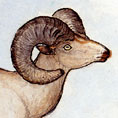 The teacher chooses some images of the animals from the web site. Position these photos so that all students can view them and have time to discuss the characteristics with their teams. The teacher chooses some images of the animals from the web site. Position these photos so that all students can view them and have time to discuss the characteristics with their teams.
- Students will share ideas about the characteristics of these animals such as fur, feathers, wings, scales, number of legs, etc.
- Teacher will group these characteristics on the chart paper that has been prepared. Place the characteristics so that mammal characteristics will be in one group. The bird characteristics will be in another group, the reptile characteristics will be in a third group, and so on.
- Students will place each animal in one category by similar characteristics.
- Student teams will report, explaining their classification. For example: “We put the grizzly bear and the buffalo in the same group because they both have fur.”
- Teacher should finally label the four columns if the students have not yet recognized the groupings.

CLOSING
Students should write down the information they have been developing and save it for entering into their journal at the next lesson.
[PRINTABLE VERSION]
|
|